
How I underestimated half of the lead
What Edition Dog LIVE taught me about the human end of the lead
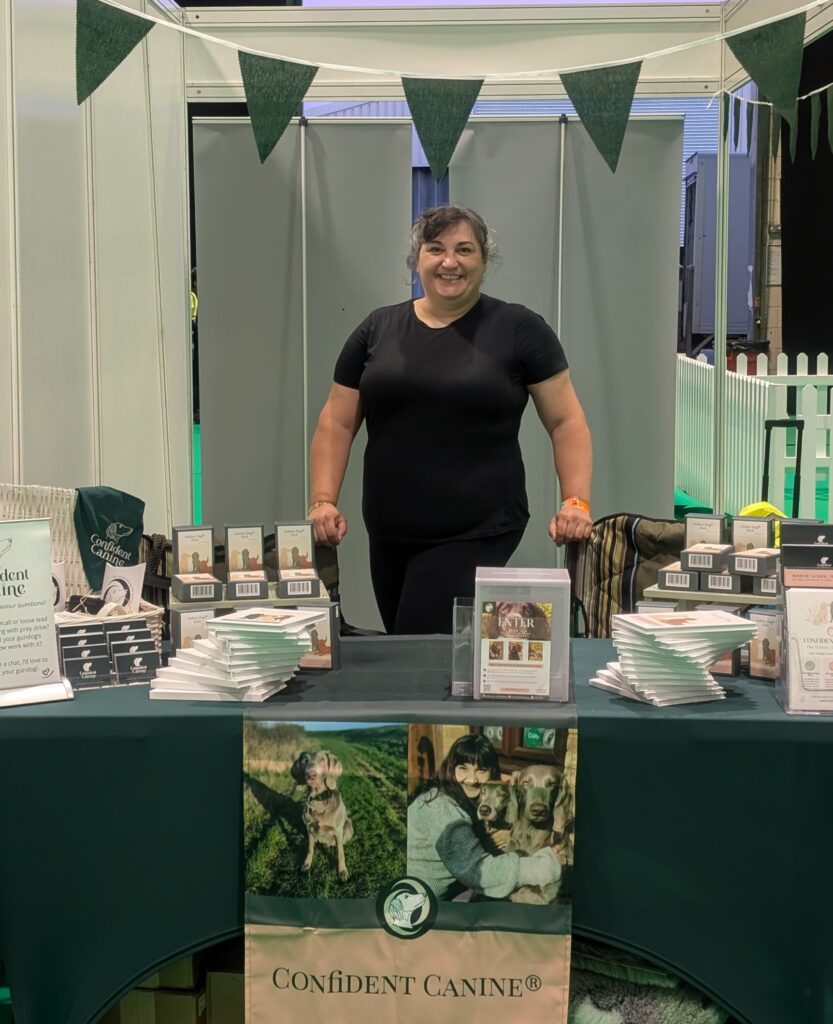
Last weekend I was at Edition Dog LIVE, teaching at the Holistic Dog® Hub. If you have never been to a big dog event, let me set the scene for you. Picture a huge, open space absolutely full of dogs and the people who love them. The air carries the smell of training treats in every direction, there are stands and booths and demonstrations happening on all sides, and the general energy is of several hundred people and their dogs having the absolute time of their lives. It is loud, busy but wonderful. And it is, honestly, one of the least likely environments I would ever have chosen for teaching someone to regulate their nervous system.
I want to tell you what happened, because it changed something for me.
The space I didn’t expect to work in
Regulation work, as I teach it, is quiet work. It asks you to slow down, to notice your own breath, your own body, your own state, before you ask anything of the dog at the other end of your lead. It is the kind of work I usually introduce in calm, contained, familiar settings, because the first few times someone tries it, their nervous system often finds the slowing-down bit genuinely difficult. Modern life is loud, and we are not often invited to actually pause inside it.
So when I planned what I was going to teach at the Holistic Dog® Hub, I did wonder whether the environment would let the work properly land. I thought the guardians who came to work with me might find the techniques I was offering interesting in theory, but tricky to actually feel in that moment. I expected the regulation to be the sticky bit. I expected people to want to try, but to struggle to actually drop into their own breath in a space full of noise and treats and excitement.
I am very happy to share that I was completely wrong.
What I had quiet faith about
I did have faith that the sensitive dogs themselves would find their way into regulation if I gave them the right support, because sensitive dogs are far more capable of regulating, when given the right opportunity, than their guardians would often give them credit for. A sensitive dog is sensitive because their nervous system is highly tuned, and a highly tuned nervous system responds very quickly to the right kind of input just as much as it does to the wrong kind of input. Give them a regulated person at the other end of the lead, in the right posture, with the right breath, and most of them will come back down surprisingly fast.
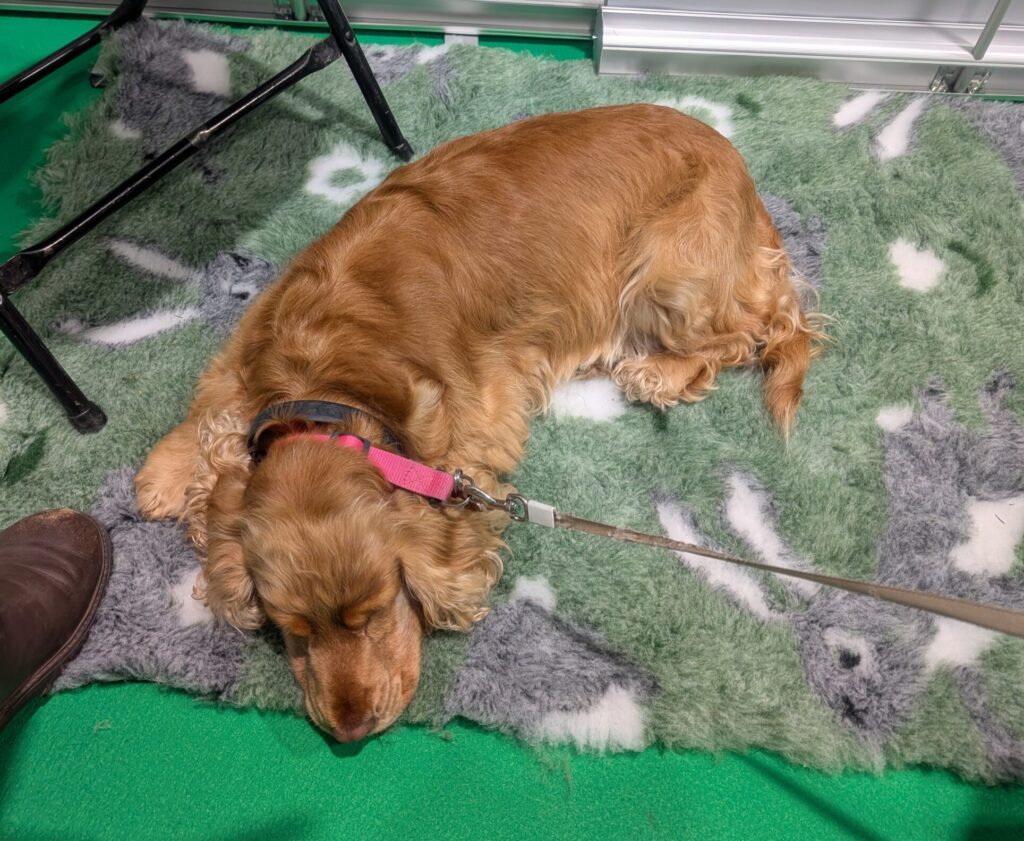
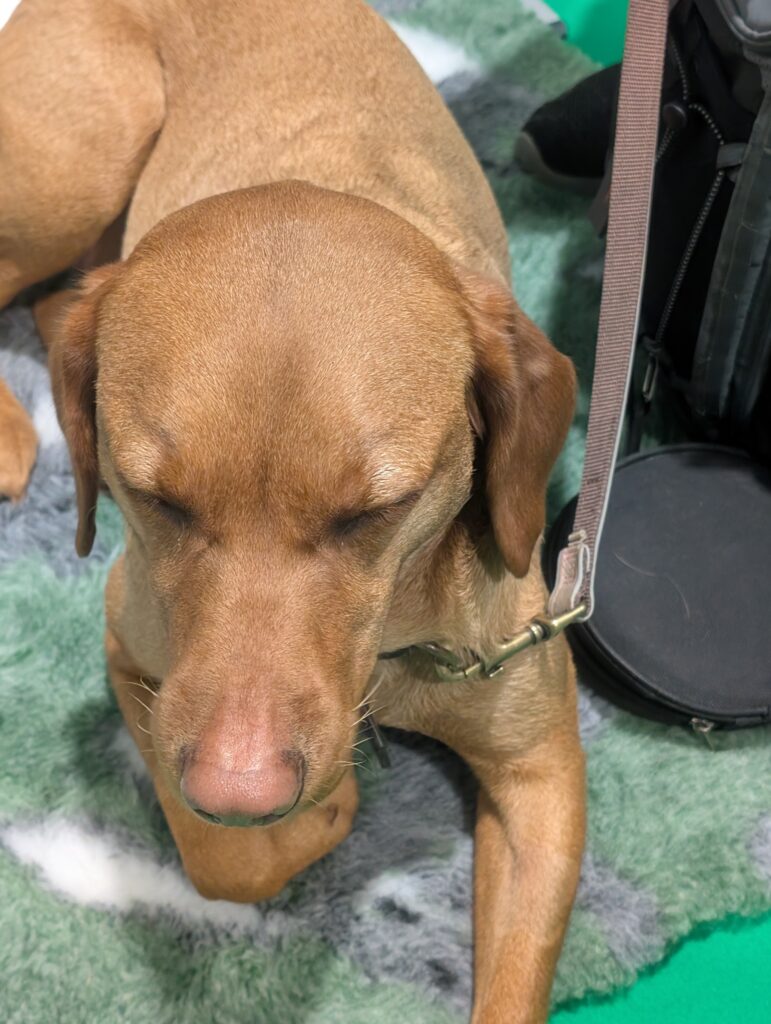
That part went exactly as I expected it to. The dogs all settled, every single one of them, the ones that arrived shaking, the ones that arrived panting, the ones that were feeling stressed and didn’t want to separate from their guardian. All of them lay down and settled in some form, one of them even rolling upside down to show us his belly.
What I had quite clearly underestimated
What I had not expected was how quickly and how easily the guardians would regulate themselves too, and also how in tune they would be, enough to notice the shift in themselves.
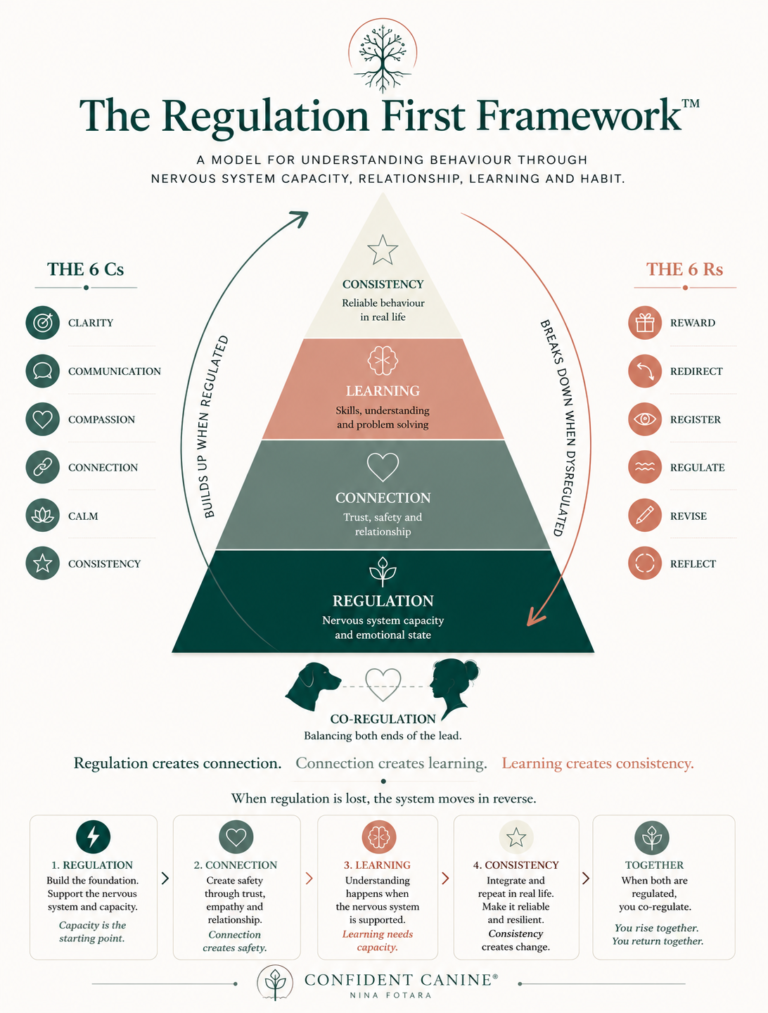
The techniques I was teaching were deliberately simple but ones that I know have a powerful and fast effect. A particular way of grounding, a particular way of breathing in more than out, known as the physiological sigh, a particular way of becoming fully present in a moment. All of it I teach in my Regulation First Model™, which is the methodology my work is built around. I expected most people to need to practise in a quieter environment initially for it to be really felt by them.
Instead, people felt the shift inside the first few breaths. They told me they could feel their energy change. They said they could feel the calm immediately. All of them could see an immediate change in their dog as a reflexion of their change. Most were really surprised at how quickly their dog calmed down once the energy was right. These were not people in a quiet, controlled, training room. These were people standing in the middle of the loudest, most sensory environment the dog world puts on, and they dropped into regulation almost immediately.
Which has made me wonder, honestly, how much of what I thought was a steep learning curve for guardians is actually just a case of nobody ever having invited them to try.
Why this changes something for me
If regulation can land this easily, in this environment, for guardians I had never met before, then there are an enormous number of people out there who would benefit from this work and simply do not know it exists yet. Almost every guardian I spoke to at the Holistic Dog® Hub was someone who had been quietly struggling with their dog in some way, and they had tried other teachings, but nearly all had never tried working holistically with their dogs.
This has reminded me how important this work is, and how many more guardians and dogs could benefit from it if I can just get the word out further than I currently reach.
So if you have made it this far down the page, I have a small favour to ask. If what I do here resonates with you, a like, a comment, or a share means more than I can say. Not just to me, but to the sensitive, intelligent dogs who quietly struggle, and to the guardians who love them deeply and are looking for a different way to help them.
If this has landed with you
My work with sensitive dogs and their guardians is built on the Regulation First Model™, which is grounded in science-based, positive, reward-based training and underpinned by two individual pillars. Regulation first, because a regulated dog can listen and can learn and an unregulated one simply cannot. And both ends of the lead, because your nervous system and your dog’s nervous system are deeply connected whether you can see it or not.
If you would like to work with me directly, you can find out more about how I work on my website, book a chat with me to talk through what you are facing, or sign up for my mailing list for more pieces like this one.
“Balancing both ends of the lead!”