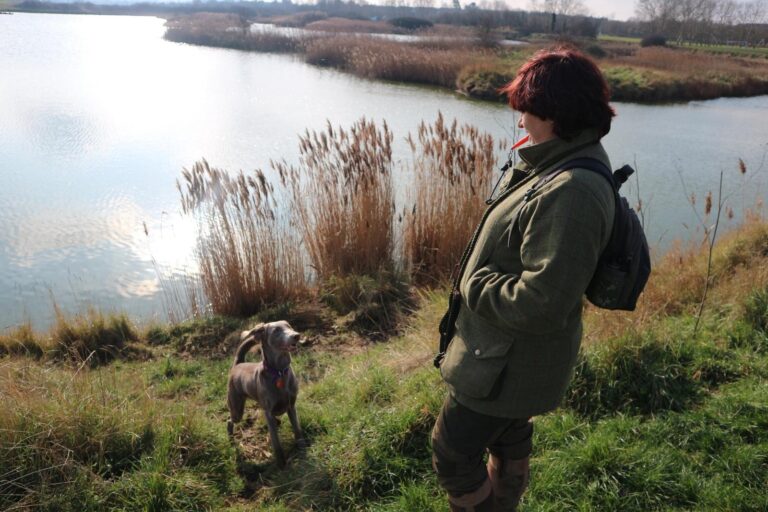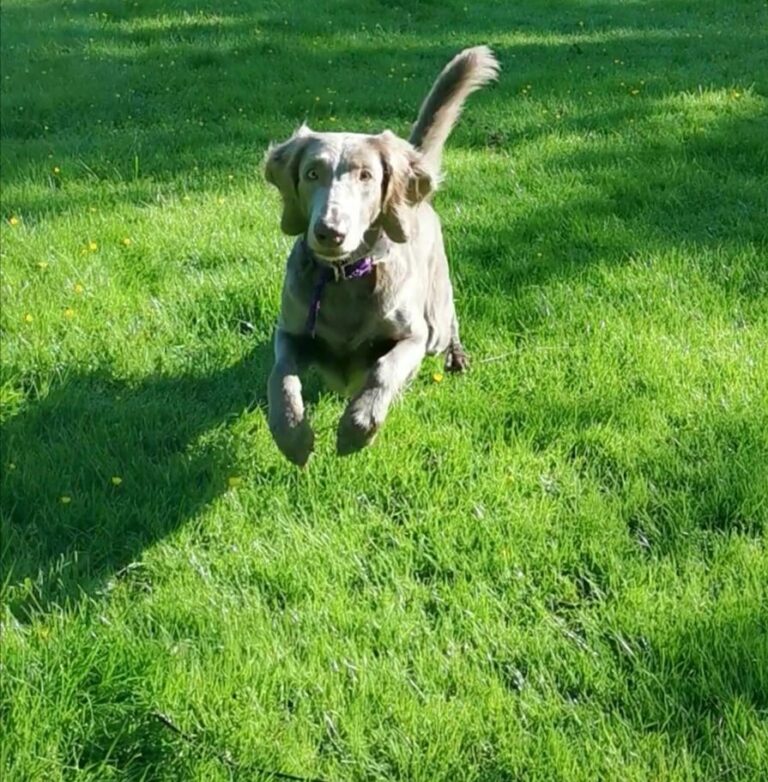

prey drive and loss of regulation are not the same thing
Your Gundog Doesn’t Have a Prey Drive Problem
Why what looks like “too much drive” is often a question of regulation, capacity and choice
If your gundog has ever disappeared after a squirrel, a rabbit, a deer or a bird and then come back ten or fifteen minutes later looking absolutely delighted with themselves while you are standing there somewhere between terrified, furious, relieved and wondering whether you can ever safely let them off lead again, there is a good chance that somebody, somewhere, has told you that you have a prey drive problem. Perhaps they have said your dog simply has too much drive, too much nose, too much instinct, or perhaps you have come to that conclusion yourself because when a gundog seems to leave the planet the moment something moves, “too much prey drive” can feel like the most obvious explanation.
And of course prey drive is part of what is happening. I am not suggesting for a moment that it is not. These are dogs who have been selectively bred over generations to notice scent, movement and game, and depending on their breed and role, to hunt, point, flush, pursue or retrieve. What we experience as a peaceful field is often an extraordinarily rich sensory environment to the gundog walking through it. There may be scent moving through the air, tracks crossing the ground, birds shifting inside cover and wildlife that passed through hours ago but has left behind information that is still completely relevant to the nose travelling over it now. Some gundogs experience all of that with far greater intensity than others, and there are absolutely dogs whose instinctive drive is incredibly strong.
Where I think we sometimes get stuck is in treating the strength of that drive as though it explains the whole behaviour.
Because if prey drive alone were the problem, we would expect the dog with the strongest instinct always to be the dog least capable of responding around wildlife, and in reality it is much more complicated than that. A highly driven gundog can notice something, become intensely interested in it and still retain enough capacity to remain part of the conversation with us. They may stop, lift their head, scent the air, change posture or become visibly excited, and none of that necessarily means they have lost regulation. They are allowed to care about the rabbit. In fact, for many of these dogs, it would be rather strange if they did not. What matters much more is what remains available to them while they care about it.
That is the distinction I think we often miss, because regulation has become so closely associated with calmness that we can begin to assume a regulated dog should move through exciting environments in a permanently soft, low-arousal state. I do not think that is realistic for many gundogs, and I am not sure it would be desirable even if it were. I want them to notice the environment. I want them to use their noses. I want them to feel excitement, movement, anticipation and all the things that make them the dogs they are. What I am much more interested in is whether they can experience those things without losing access to themselves all their connection with / their handler.
Most people who live with a driven gundog know what that difference feels like, even if they have never put language around it. There are moments when your dog sees something and you can almost feel the intensity rise through them, but there is still some sense that they are with you. They may take longer to respond than usual, they may need a second to disengage, and you may feel that you are asking for more than you would be in the garden, but there is still some movement between the thing they want and everything else around them. Then there are other moments when something changes more fundamentally. Their mouth closes, their breathing alters, the softness goes out of their body, their weight shifts forwards and their attention seems to narrow until the thing in front of them becomes the only thing that matters. You might call their name and see an ear flick without the head moving. You might ask for something they know and get a delayed response that feels as though ninety per cent of the dog is somewhere else. Sometimes you can feel that transition before they have moved a muscle, because the dog who was with you thirty seconds ago is beginning to disappear.
That, for me, is where the conversation stops being only about prey drive and starts becoming a conversation about capacity.

Sometimes the thing that tips the dog over that edge is dramatic enough to explain itself. A deer explodes from cover ten metres away and suddenly the dog who was genuinely settled a second earlier has an enormous amount of sensory and instinctive information arriving all at once. In that situation, I do not think it is helpful to look backwards and assume the guardian must have missed something or failed to regulate the dog properly before the event. Some triggers are simply huge for the individual dog in front of us, and a nervous system can be coping beautifully until something arrives that exceeds what it can currently hold.
At other times, though, the story begins much earlier than the moment we later identify as the problem.
Imagine an ordinary walk to somewhere your gundog loves. They recognise the route in the car and become a little more excited before you arrive. Perhaps they begin watching through the window, perhaps they whine or shift around, or perhaps there is nothing particularly dramatic at all, but you can tell they know exactly where they are going. When you arrive, they get out quickly and immediately start taking in the environment. There is another dog in the car park, a bird shoots out of the hedge, the wind is moving scent everywhere and your dog is already pulling towards one area and then another because there is so much to investigate. None of it looks disastrous. They can still take food, they can still respond when you ask for something and, technically, they are still listening, so you carry on because they will probably settle once they have had a chance to move.
Then you reach the field, let them off, a squirrel runs and they are gone.
From where we are standing, the squirrel caused the problem because that is the point where everything visibly changed, but the squirrel may only have been the final thing added to a system that had been gradually filling for the previous twenty minutes. The car journey mattered. The anticipation mattered. The dog in the car park mattered. The scent, the wind, the movement and all the little pieces of information the dog had been processing mattered, even though none of those things, by themselves, looked like a problem.
I sometimes think of this in human terms because most of us understand immediately what it is like to have more or less capacity on different days. There are days when you can deal with a ridiculous amount going wrong and remain patient, thoughtful and relatively calm, and then there are other days when you have slept badly, rushed through the morning, had three difficult conversations, realised you are running late and then spill a cup of tea, and somehow the cup of tea feels like the final insult. Nobody looking at that situation sensibly would conclude that the tea explains the whole reaction. The tea simply arrived when there was very little room left.
Sometimes, for our gundogs, the squirrel is the cup of tea.
I think that matters because it helps explain something guardians often find deeply frustrating, which is how the same dog can look beautifully trained on one walk and apparently forget everything on another. You might go through a field on Tuesday, your dog notices wildlife, reconnects, recalls beautifully and gives you that wonderful feeling that all the work is finally coming together. You come away thinking you have turned a corner. Then you go back on Thursday and seemingly everything has disappeared, even though the place looks the same and the cue is the same and the dog is the same dog.
It is easy to interpret that as inconsistency, or even as a dog who knows perfectly well what is being asked but has chosen not to do it, particularly when we have already seen them succeed in a similar situation. But capacity is not a fixed amount. It changes according to what the dog has already experienced, how much novelty is in the environment, whether they are tired, frustrated, physically uncomfortable, overexcited or simply processing more information than they were the last time. It changes with things we can see and probably with plenty of things we cannot. The dog who has a great deal of capacity available can meet a large challenge and still have enough left to think, whereas the very same dog may reach their limit much sooner on another day because they arrived with less room to begin with.

This is also why I think recall can become such a misleading measure of what is actually happening.
A lot of guardians will say to me, with genuine confusion, “But they know their recall,” and very often they are absolutely right. Their dog does know it. They have practised it in the garden, on walks, around food, toys and other dogs, perhaps even around wildlife at a distance. They have a long reinforcement history behind the cue and they have seen the dog respond to it hundreds of times, so when a deer runs and the same whistle appears to mean absolutely nothing, it can feel as though all of that training has suddenly failed.
But knowing a skill and being able to access it under every possible level of pressure are not the same thing.
If somebody can swim perfectly well in a warm swimming pool, we do not question whether they know how to swim. If that same person unexpectedly falls into freezing, rough water while fully clothed and frightened, however, their ability to use that skill may suddenly look very different. The skill has not vanished, but the body trying to access it is now processing cold shock, fear, breathing changes, movement and a huge amount of sensory information all at once, which means something that is easy in one state can become incredibly difficult in another.
I think our gundogs deserve the same level of nuance. A recall cue does not necessarily stop having meaning simply because the dog cannot respond to it at the height of a chase. Sometimes we are asking whether the recall is strong enough when the more useful question is whether the dog is still in a state where the recall is available to them at all.
And often, by the time we are desperately blowing the whistle while watching the dog disappear across the field, the moment where we could most easily have helped them has already passed.
This is one of the reasons I spend so much time encouraging people to notice the earlier changes, because the dramatic behaviour is rarely the only information the dog gives us. Perhaps they stopped checking in two minutes earlier. Perhaps their movement became quicker and more driven, or the quality of their sniffing changed from relaxed investigation into something much more focused. Perhaps they could still respond to you, but there was a delay that had not been there five minutes before. Perhaps they stopped taking food in quite the same way, or the way they were moving through the environment began to feel less exploratory and more consumed.
None of those things automatically mean that the dog needs to go straight back on lead or that the walk is going wrong. They are simply information, and information gives us options. The earlier we notice that a gundog’s capacity is beginning to change, the more room we have to alter what happens next, perhaps by increasing distance, changing direction, adding more structure, using the long line, allowing time to decompress or simply deciding that today is not the day to test the level of freedom they managed last week.
This is also why I am increasingly interested in the quality of a behaviour rather than simply whether the behaviour happened. A dog can sit while becoming progressively overwhelmed, just as they can walk beside us while their entire attention is somewhere else. We can look at the outside of the dog and tick the box that says they completed the exercise without noticing the state from which they completed it. Equally, we can look at a dog who is running, excited and highly activated and assume they are dysregulated when actually they are moving fluidly between excitement, connection and recovery and are coping beautifully with the environment.
The same is true of steadiness. Two gundogs can be sitting in almost identical positions while having completely different experiences. One may be watching something exciting but still breathing, thinking, listening and processing, while the other is holding themselves in place with enormous effort, body rigid, eyes locked and every bit of available capacity being used simply not to move. If our only measure is whether the dog stayed physically where they were asked to stay, those two pictures may look equally successful. If we are also interested in regulation, they are not the same picture at all.
For me, that is where gundog training becomes much more interesting, because I am not only interested in whether the dog performs the behaviour. I am interested in whether they can remain available to themselves while performing it.
That is also why so much of the useful work happens before the rabbit appears.
We understandably want to know what to do in the dramatic moment because that is when we feel most helpless, but the training that changes those moments often looks incredibly ordinary. It is noticing how the dog gets out of the car rather than automatically marching towards the field. It is recognising that they are already more activated today and allowing that information to influence your choices. It is deciding not to let them off simply because this is the place where they usually go off. It is using a long line without seeing that as evidence that you have somehow gone backwards. It is giving the dog enough time to arrive in an environment rather than immediately asking them to cope with the hardest part of it.
I think people sometimes resist those decisions because progress in training is so often imagined as a straight line. Once the dog has achieved something, we want it to stay achieved. If they recalled from a rabbit last week, then rabbits should now be sorted. If they were steady yesterday, we expect steadiness today. If they spent twenty minutes off lead without hunting last Tuesday, it can feel like failure to clip the long line back on this Thursday.
But nervous systems do not work in straight lines, and neither do relationships.
Sometimes the most skillful training decision is the one that looks least impressive from the outside. You clip the long line on because the dog is carrying more today. You move further away because you can see the dog beginning to lose the ability to process. You leave a field because continuing would mean repeatedly asking for something the dog is no longer in a position to give you. Nobody applauds those decisions, but they protect learning in a way that constantly pushing the dog to the point of failure never can.

There is another part of this picture as well, and that is the nervous system arriving at the field with the dog.
If you have ever lost your gundog after wildlife, especially if you were genuinely frightened by it, there is a good chance that you do not return to the same environment as the same person you were before it happened. You may begin scanning the hedge before you are even aware you are doing it. You may shorten the lead as you approach the place where the deer appeared last time. Your dog lifts their head and you immediately wonder what they have seen. Perhaps you start recalling more frequently, or talking more, or watching the dog so closely that your own movement and breathing begin to change.
This does not mean your anxiety causes the chase, and I think it is incredibly important to say that clearly because guardians are already made to feel responsible for far too much. If your dog disappears after a rabbit, it does not mean you transmitted the wrong energy or failed to be calm enough. What it does mean is that there are two nervous systems in the environment, both of which have histories, both of which anticipate and both of which influence the interaction between them.
The dog begins to scan, the guardian notices and becomes more vigilant, the lead changes slightly, the dog notices that change, the guardian feels the dog becoming more alert and becomes more worried, and very quickly the two of them are responding not only to the environment but to each other as well. There is no useful point in deciding who started it. The important thing is recognising that both ends of the lead may now be carrying less capacity than they did when the walk began.
This is where I think the same principle applies to the person as it does to the dog. We cannot simply tell the guardian to relax any more than we can tell the gundog to stop caring about the deer. If somebody has spent months worrying that their dog may disappear, or has stood in a field calling for twenty minutes while their stomach dropped further and further, their body has learned something from that experience too. The answer is not to pretend they feel differently. The answer is to build enough safety, predictability, skill and confidence that both ends of the lead have more room available when the difficult thing happens.
And that, for me, is the real shift in how I think about prey drive.
The aim is not to train the instinct out of the gundog. I do not want a gundog who walks through a field and notices nothing, and the absence of interest is not a measure of successful training. I want the gundog to smell the scent, see the movement, feel the excitement and still, increasingly, retain enough of themselves to make choices around it.
That does not happen by repeatedly throwing them into situations where instinct wins and then making the recall louder. It happens by working around the point where choice is still possible and gradually helping that point move. The dog who once needed a hundred metres from a bird may eventually cope at fifty. The dog who once needed help to disengage may begin to offer the disengagement themselves. The dog who once disappeared into every interesting scent may learn that they can hunt and explore without losing awareness of the person they came with.
The prey drive has not gone anywhere, the dog simply has more capacity around it.
And I think that is an important distinction, because when we decide that prey drive itself is the problem, our training naturally starts to focus on suppressing the thing we can see. We want the dog to stop looking, stop hunting, stop chasing, stop becoming so interested, when what may actually need developing is the dog’s ability to experience all of those instincts without losing access to thought, connection and choice.
That is a much bigger ask than simply teaching a recall, but it is also a much more honest one. It respects the dog we chose to live with, including the instincts humans deliberately strengthened for generations, while still recognising that those instincts have to exist safely within the world we now ask that dog to navigate.
So, when a gundog disappears after a squirrel, I do not think the most useful question is simply, “How do I stop this dogs prey drive?” I want to know what happened in the minutes before it, how available the dog was, what their body was telling us, how quickly their state changed, how intense the trigger was, what choices were still available before the chase began and how quickly they were able to recover afterwards. Those questions give us somewhere to go, because they tell us more than the label ever could.
Your gundog may have a lot of prey drive. They may have an extraordinary amount of prey drive. That is part of the reality of living with some of these breeds, and pretending otherwise does not help anybody.
But prey drive and loss of regulation are not the same thing.
The goal is not to create a gundog who feels nothing when the deer runs. It is to help that gundog become increasingly capable of feeling exactly what the deer means to them, while still retaining enough of themselves to remain part of the conversation with us.
That, for me, is where prey drive stops being something we need to fight and becomes something we can finally learn to work with.