Your Puppy Is Learning What Works
Even When You Don’t Realise You’re Teaching
One of the things I hear quite often from clients is that their dog is actually really good at certain types of waiting. They might wait beautifully before their breakfast or dinner, they might pause nicely before going out into the garden, or they might understand that they do not rush through a door until they have been given permission. And when we look at those moments, there is usually a very clear reason those behaviours are working so well, which is that the owner has been consistent with them, often right from the beginning.
It may not have been taught as a formal training exercise, and it may not have involved a reward in the way that an owner might consider rewards, a training plan, or a structured “session” in the way people often think training needs to look. But from the time that puppy came home, there was probably a fairly clear pattern around that particular moment. The bowl did not go down until there was a little bit of calm (reward here being food), the door did not open fully until there was a pause (reward here being freedom), or access to the garden happened after some stillness rather than through barging forwards (reward here being the great outdoors). Because that pattern was clear, repeated, and held consistently enough, the puppy learned, “This is how this works.” If I do this I get what I want.
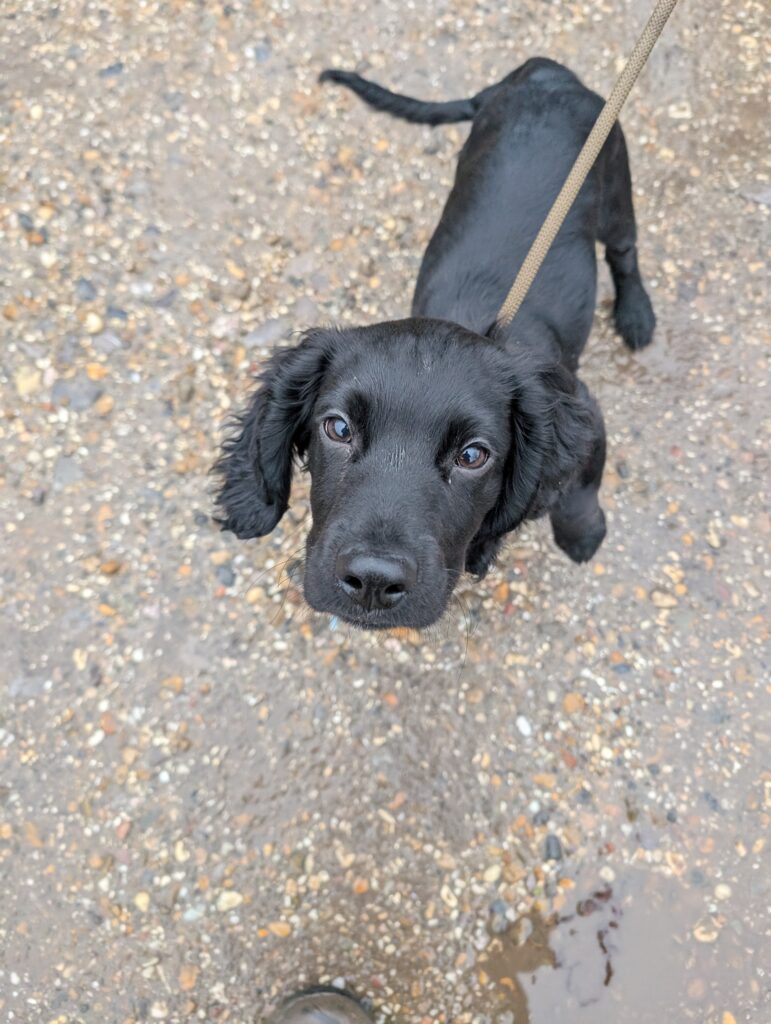
That is the bit I think is often missed, because puppies are learning all the time, not only when we decide we are “doing training”. They are not only learning when we have treats in our hand, or when we are standing in the kitchen asking for a sit, or when we have deliberately set up a little exercise. They are learning from every repeated pattern in their life, from what gets them access, what makes the human move, what causes the lead to go slack, what opens doors, what creates attention, and what leads to greeting, sniffing, chasing, exploring, or reaching something they want. They are not sitting there making moral decisions about whether something is good or bad, they are simply learning what works.
And they are also learning the feeling around those moments, which is the piece I think matters deeply, because the learning is not only mechanical. It is emotional, relational, and energetic. If your puppy learns that waiting quietly for their breakfast brings a calm, predictable, pleasant outcome, they are not just learning the physical act of waiting. They are learning that stillness is safe, that they do not have to push, rush, grab, or panic, and that your energy around that moment is steady enough for them to soften into. That same thread is often missing in the behaviours people struggle with later, and I think that is where so many people end up feeling confused, because they can see their dog is capable of being calm and patient in one area of life, but they cannot always see why that same skill has not appeared somewhere else.
Lead walking is a really common example of this. A young gun dog puppy sees something interesting, perhaps another dog, a person, a smell, a gateway, a bird, a puddle, a child, or something moving across the path, and they pull towards it. At that stage, it often feels sweet. The puppy is small, curious, innocent, and full of life, and the owner quite understandably wants them to experience the world. So they follow the puppy over. They let them investigate. They let them greet. They let them sniff, bounce, explore, and feel the joy of discovering new things, and I understand why that happens, because there is something genuinely beautiful about watching a gundog puppy meet the world.
But we have to look at what the puppy is learning in those moments, and we also have to look at what we are putting into those moments. The puppy is not only learning, “I pulled and I got there.” They are also learning that pulling towards something can create a whole shared experience. The puppy surges forwards with excitement, and the human goes with them. The human’s energy is often happy, soft, amused, encouraging, and open. There is a feeling of, “Oh, look at you, isn’t this lovely, let’s go and see.” There is warmth in it, there is connection in it, and there is a shared joy in watching this little dog discover life.
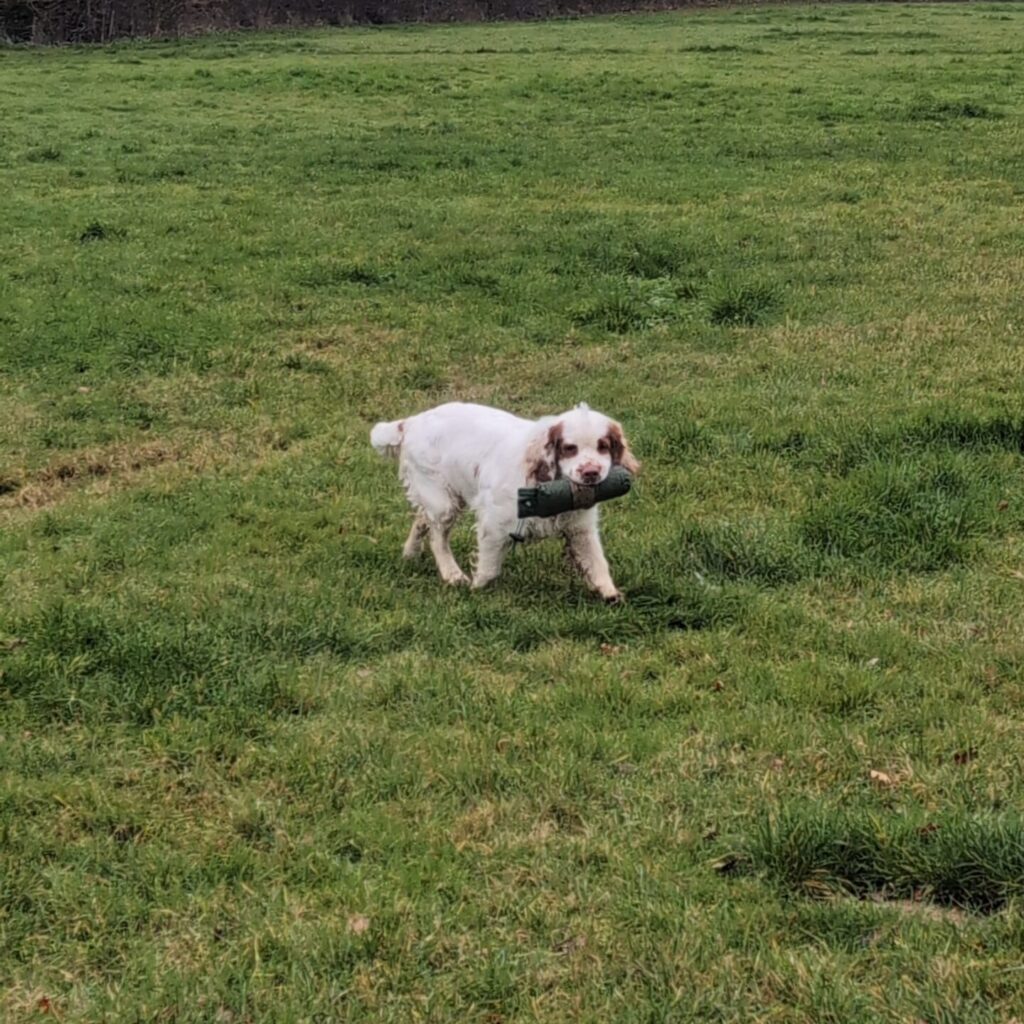
So for your gundog puppy, the pattern is not just practical. It is energetic. Their body pulls forwards, their human comes with them, the thing they wanted becomes available, and the whole moment is wrapped in positive emotional energy. The puppy has not only learned that pulling works. They have learned that this is how exciting things are shared, and that is why it can become so confusing later when the puppy grows, the same behaviour continues, but the feeling around it starts to change.
Their body gets bigger, their confidence increases, their strength develops, and their instincts start to come online more fully. With gundogs especially, the outside world can become intensely meaningful. Scent matters, movement matters, birds matter, space matters, and environmental information matters. The puppy who once gently leaned into the lead to reach something exciting can become an adolescent or adult dog who puts their whole body into getting there, because that is the pattern they have rehearsed and the pattern that has made sense to them.
But now the human’s experience has changed. The lead hurts their hand, their shoulder aches, walks feel unruly, and every exciting thing in the environment becomes something to brace for. The person may feel embarrassed, frustrated, tense, or exhausted before the walk has even properly begun, and the same behaviour that once created joy, softness, and shared discovery now creates tension, resistance, correction, or emotional discomfort. From the dog’s point of view, that can be deeply confusing, because they have not knowingly changed the rule. They are doing the thing that used to work. They are following the pattern that once opened the world and brought their human into that lovely shared moment with them, but now, suddenly, the energy has shifted.
The behaviour that once seemed to create connection now seems to create conflict. The lead tightens, the human tightens, the emotional atmosphere changes, and the dog feels frustration rising without necessarily understanding why. This is one of the reasons loose lead walking can become so emotionally loaded, because it is not only about whether the dog is physically pulling or not pulling. It can become wrapped up in confusion, pressure, and uncomfortable feelings on both ends of the lead. The dog surges because that is the pattern they know, the human braces because the behaviour has become difficult to live with, and the lead becomes the place where that misunderstanding is felt.
And this is why changing the way we think about lead walking from the beginning is crucial, because loose lead walking is not just about teaching a puppy not to pull. It is about teaching them what the lead means. The lead should be about connection. It should be a soft line of communication between you and your puppy, not something they lean into, brace against, drag you through, or experience only as restriction. The lead is not there to stop your puppy experiencing life. It is there to help you share the experience together, safely, clearly, and with awareness.
That is such an important difference, because if a gun dog puppy learns from the beginning that the lead is part of how you move together, then the lead has a completely different energetic meaning. It does not become the thing they fight against to reach the world. It becomes part of the conversation. It says, “We are doing this together.” It says, “I am with you.” It says, “Your excitement is welcome, but we do not have to let it pull both of us out of balance.”
That is not about making puppies dull, robotic, or over-controlled. Puppies should not feel afraid to explore, afraid to get things wrong, or constantly being micromanaged. Puppies should be curious and joyful. They should have opportunities to sniff, investigate, watch, play, and experience the world. But they also need to learn how access happens. They need to learn that the world does not open because they throw themselves at it. They need to learn that excitement can still include connection, and this is where early foundations are so powerful.

When a puppy comes home, they are not a completely blank slate, because of course they arrive with genetics, breed tendencies, temperament, sensitivity, instincts, and preferences already present. A gundog puppy is not just a generic puppy in a different coat. They may already be scent-driven, movement-sensitive, socially interested, environmentally aware, naturally inclined to search, chase, retrieve, carry, scan, or investigate. Those traits are not problems. They are part of who the dog is. But while they are not genetically blank, they are clean slates in terms of what we have personally taught them about life with us.
They have not yet learned how walks work with us. They have not yet learned whether pulling creates access. They have not yet learned whether checking in matters. They have not yet learned whether calm behaviour opens doors. They have not yet learned whether excitement means rushing forwards, or whether excitement can still happen in connection. They have not yet learned whether we are a steady presence in the environment, or simply the person attached to the other end of the lead. That is the opportunity, because if we can teach the right patterns early, we are not spending the next few years trying to undo confusion. We are showing the puppy, gently and consistently, how we want life to work.
We are teaching them that pausing does not mean losing the opportunity. We are teaching them that softness on the lead helps the walk continue. We are teaching them that checking in with their person is valuable. We are teaching them that their human is not an obstacle to get past, but part of the experience. And energetically, we are teaching them something even deeper, because we are teaching them what our presence means.
Does our presence mean clarity? Does it mean steadiness? Does it mean, “I can help you move through this moment”? Or does it mean uncertainty, tension, rushing, inconsistency, and emotional noise? That is not said as blame, because most people are doing the best they can with the information they have at the time, and it is very easy, especially with a young puppy, to confuse giving them a lovely life with letting them access everything they want in the exact moment they want it. Of course we want them to have joy. We want them to have freedom. We want them to experience the world. But freedom without clarity very quickly becomes frustration, especially for dogs who already find the environment highly reinforcing.
A lovely life for a puppy includes joy, exploration, scent, movement, play, and choice. But it also includes boundaries that make sense. It includes emotional regulation. It includes learning how to cope when access does not happen instantly. It includes learning that the human can hold the pattern clearly enough for the puppy to relax into it, and that is what I mean when I talk about both ends of the lead.
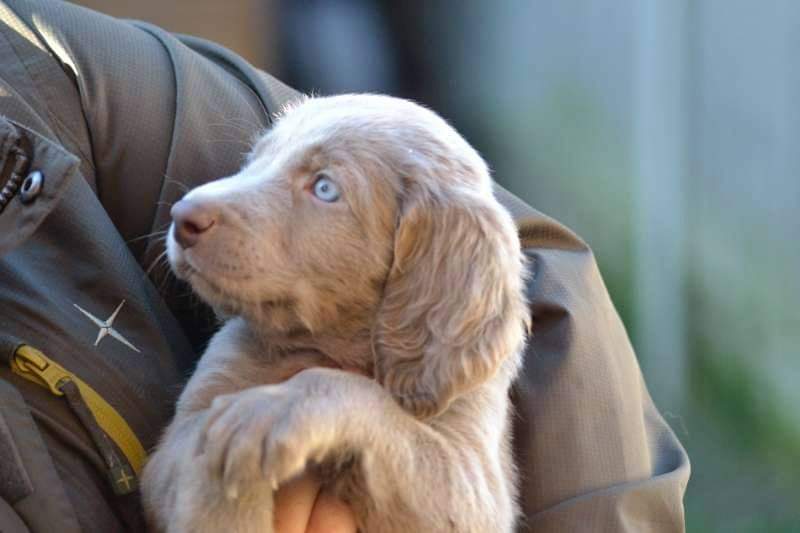
The puppy is learning from their own body, their environment, their instincts, and the outcomes they receive, but they are also learning from us. They are learning from our breath, our timing, our lead handling, our hesitation, our clarity, our inconsistency, our softness, our tension, and our emotional response to what they are doing. They are learning whether their excitement pulls us out of balance, or whether we can stay steady enough to guide them.
This is especially important with gundog puppies, because so much of their behaviour is tied into instinctive desire. They are often not casually interested in the world. They are deeply drawn into it. Scent can pull them, movement can pull them, birds can pull them, and people, dogs, food, toys, and open space can all become incredibly meaningful. If we do not understand that early, we can accidentally build patterns that become very hard to live with later, and that is why working with someone who understands your breed, and the adult dog your puppy is becoming, can make such a difference.
Good puppy support should not just be about teaching a few basic cues. It should not just be “sit”, “down”, “wait”, and “come”. Those things can be useful, of course, but they are not the whole picture. What really matters is helping you understand how your puppy learns, what their breed traits are likely to become, how to shape access to the environment, how to build connection around excitement, and how to create patterns that will still serve you when your puppy is bigger, stronger, and more independent.
Because the behaviours that feel small in puppyhood often become the habits we either rely on later, or spend years trying to undo. If your puppy learns that waiting calmly makes the food bowl appear, that can become a useful pattern. If they learn that pausing at the garden door opens the way forwards, that can become a useful pattern. If they learn that softness on the lead allows exploration to continue, that can become a useful pattern. If they learn that checking in with you helps them access the world, that can become a useful pattern. But if they learn that pulling creates access, that also becomes a pattern.
And if that pattern is wrapped in joy when they are little, then turns into frustration when they are bigger, the dog can end up feeling confused, conflicted, and emotionally uncomfortable around the very thing we are now trying to teach. So when someone tells me their dog waits beautifully for food, I do not hear that as a tiny isolated skill. I hear evidence that consistency works. I hear evidence that the dog can understand a pattern when the human has made the pattern clear. I hear evidence that calm repetition, held with certainty, can create learning.
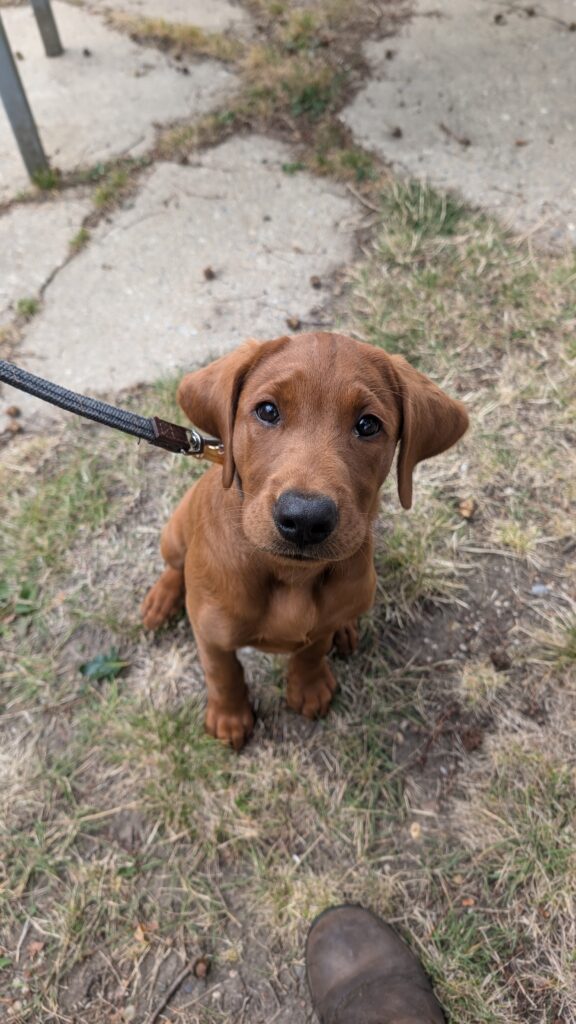
The question then becomes, where else do we need that same clarity?
If a puppy can learn to wait for their dinner, they can also begin to learn that rushing towards another dog does not create a greeting. If they can learn to pause at the garden door, they can learn to pause before getting out of the car. If they can understand that stillness makes the food bowl appear, they can learn that softness on the lead helps the walk continue. The principle is not complicated, but we do have to notice the teaching opportunity early enough, and we have to be honest about the fact that we are always teaching, whether we mean to be or not.
We are teaching when we open the door. We are teaching when we follow the puppy towards something. We are teaching when we let them reach a person, dog, scent, or exciting object. We are teaching when we hold the lead. We are teaching when we brace. We are teaching when we soften. We are teaching when we laugh, when we rush, when we hesitate, and when we calmly hold the boundary. Your puppy is always learning from the patterns you repeat, and that is why the right start matters so much, not because your puppy needs to be perfect, or because you should be training every second of the day, but because those early repetitions quietly shape what your puppy believes life with you feels like.
The aim is not to take the joy out of puppyhood, because I absolutely do want puppies to experience the world, to be curious, to sniff, to explore, to feel that lovely sense of discovery and connection with their person, but I also want that joy to have some clarity wrapped around it. We want the puppy to learn that the world is available through connection, not through throwing their whole body forwards and hoping the human follows, because that is where so many of the problems begin later on.
Because your puppy is learning more than the behaviour. They are learning the pattern, they are learning the feeling, they are learning the energy, and they are learning what life with you means. If we want adult dogs who can move through the world with calm, clarity, and connection, we need to start by noticing what we are teaching them while they are still small enough for those lessons to feel easy.
That is where good foundations begin.